
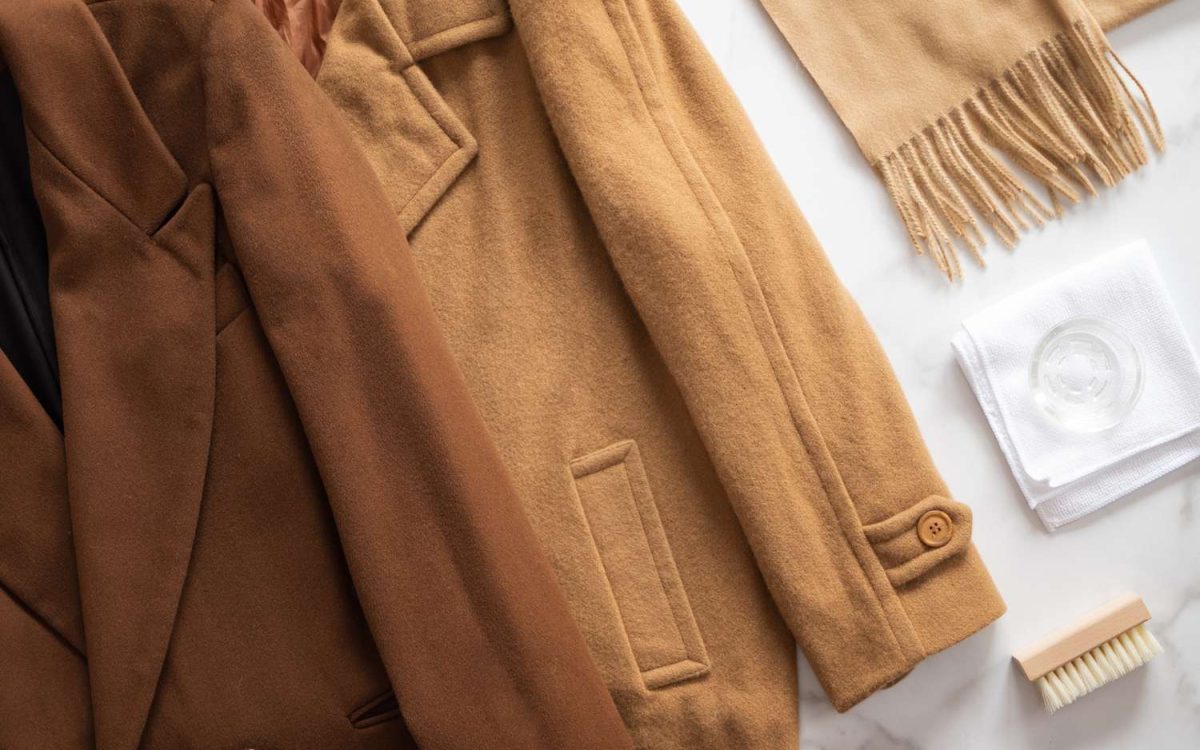
Two baskets, one decision: the cotton T-shirt goes in the washer, the wool blazer does not. So, what is dry cleaning? It is a process of cleaning clothing and textiles using a liquid chemical solvent instead of water. Fabrics are soaked in the chemical solvent, spun, and dried in a closed chamber, and then pressed. Water cannot dissolve oils and grease, and that’s where the solvent comes in. The solvent lifts the oils and greases and dissolves them.
Concrete version: your lined wool blazer drops into a liquid chemical solvent, tumbles for a few minutes, spins dry, and gets pressed, and comes back the same shape it went in. Put it through the home wash, and the water makes the wool expand and the lining pucker, and the shoulders never recover.
What Is Dry Cleaning, and Why Is It Called “Dry” If a Liquid Is Involved?
It means water-free, not liquid-free. In OSHA’s guidance for dry cleaning operators, they explain that the process is called “dry” because neither the solvent nor the process contains water, and perchloroethylene (commonly known as “Perc”) is a liquid. Perc also evaporates from textiles faster than water, so that’s why the fabrics come out nearly dry.
Water relaxes fibers and causes them to swell. It is the same with wool and silk, and that swelling is what causes shrinking, felting and distortion. If a solvent other than water is used for cleaning, then the fiber remains the same and there is no shrinking or felting, so structured and delicate garments come through intact.
Solvents, in general, have a good affinity for oils and fats and therefore solvents dissolve body oils, grease, make-up, oil-based soils, and food stains. What solvents aren’t good for — hold onto this, as this fact decides a real case later — are water soluble soils such as sweat, salt ring stains and juice stains.
So, a wool suit, a silk blouse, a lined blazer, a beaded dress, and a velvet jacket are all solvent items. A cotton T-shirt is laundry. Three near misses worth separating, because people use the words interchangeably. Dry cleaning is a commercial solvent process which takes place in a closed system. Regular laundry is a process which involves water and detergent plus agitation and heat. Professional wet cleaning is a third process entirely, a controlled, commercial process, which cleans apparel in water, with mechanical action and specialized detergents — not a self-service laundromat, and not a solvent at all.
The concept has been around for almost 200 years. The father of modern dry cleaning, Wikipedia tells us, was Jean Baptiste Jolly, who in 1825 noticed that when spills of turpentine occurred on a tablecloth, the solvent took the stains with it. He commercialized this process at his Paris dye-works, Teinturerier Jolly Belin, and the first dry cleaning service opened in Paris in 1845. A US patent for a process called “dry scouring” was filed four years prior to Jolly’s discovery, in 1821.
How the Process Actually Works, Step by Step
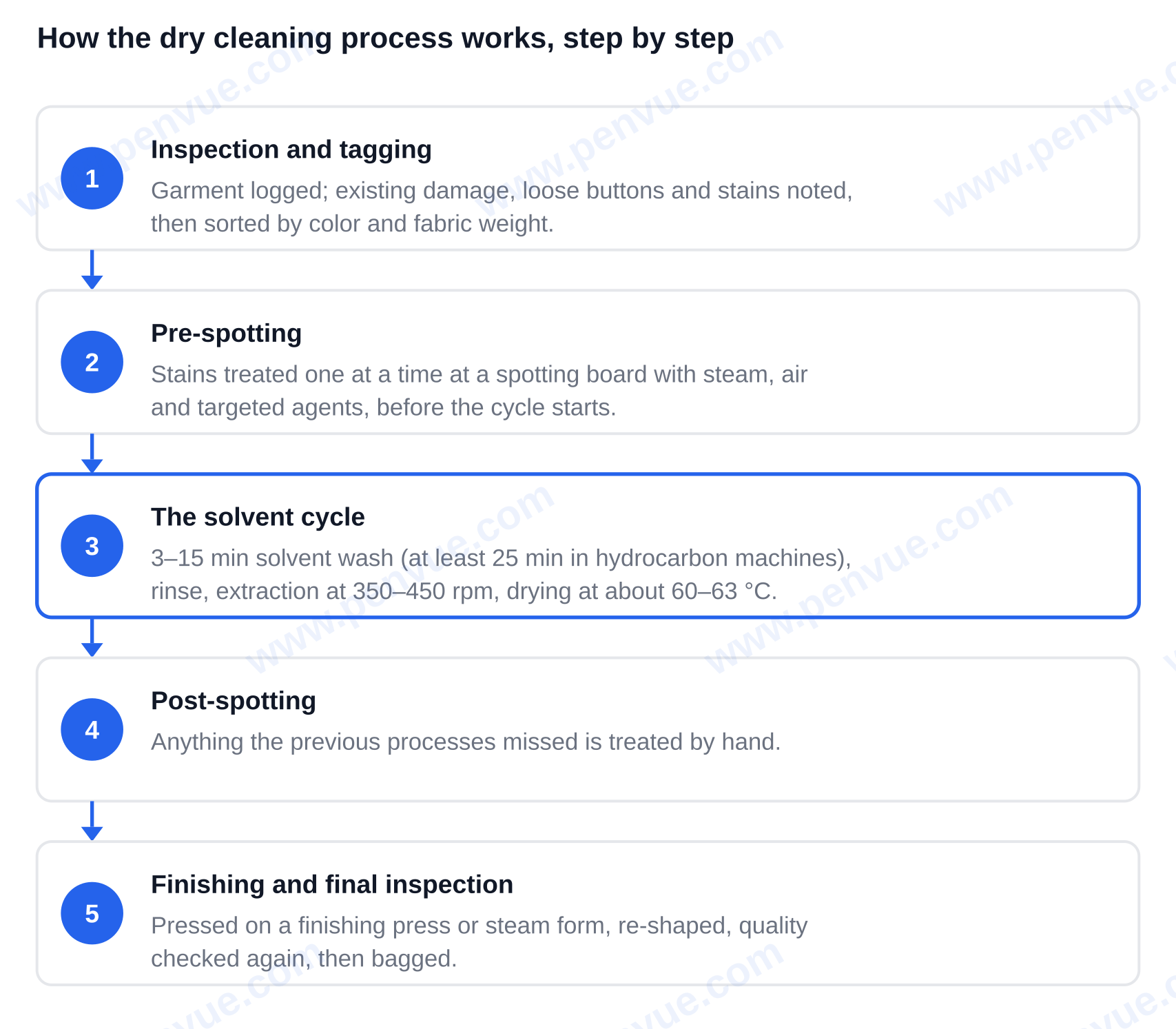
Most explainers get the process wrong by saying the machine “gently agitates” your clothes and leave it there. Here’s what actually happens, with the actual numbers from Wikipedia, to show you that the process is gentler than a home wash.
- Inspection and tagging. The cleaners log the garment and note existing damage, loose buttons, and stains. They then sort by color and fabric weight. As the experts in NBC Select’s explainer point out, this service is usually done within five steps.
- Pre-spotting. Next, pre-spotting happens, where workers treat stains, one at a time, at a spotting board with steam, air and targeted agents. They do this before the cycle even starts, because not all soils will be removed by the solvent cycle.
- The solvent cycle. The solvent cycle uses a wash of the solvent for 3–15 minutes, dependent on the garment (at least 25 minutes in hydrocarbon machines). This is then followed by a rinse in clean solvent, extraction at 350–450 rpm, and drying in warm air at about 60–63 °C (140–145 °F). The garments are then aerated through activated carbon filters.
- Post-spotting. If anything was missed by the previous processes, it is treated by hand.
- Finishing and final inspection. The final step is pressing the piece on a finishing press or steam form, re-shaping it, and checking the overall quality again before bagging it.
Take a look at those figures with your own machine: a couple of minutes in the wash instead of an hour; a quick spin and dry at about 60 °C compared to a long, hot, tumbling cycle. A cool, short, and gentler cycle is the reason a tailored jacket keeps its shape. Modern machines have improved, too. They recover over 90% of the solvent they use, fourth-generation machines recycle vapor in a closed circuit, and fifth-generation machines keep the door locked until solvent concentration falls below 300 ppm.
Cleaning time is usually 24 to 72 hours. Some shops say they offer same-day service for things dropped off before 9am and picked up by 5pm, but this is usually for less intricate and embellished garments.
Which Solvents Cleaners Use — and How to Read the One on the Shop Window
Since the 1930s, perchloroethylene, or perc, has been the most common dry cleaning solvent, and it took over completely in the 1950s. Stoddard solvent was replaced by perc because perc cleaned better and didn’t burn. As of 2012, Wikipedia records that 50% to 70% of US dry cleaners were using it. The rest of the lineup exists because perc’s downsides caught up with it: IARC placed perc in Group 2A, which means that it is “probably carcinogenic.”
The numbers in the figures below are from Wikipedia. KB value is the measurement of solvents on their cleaning ability. The higher the number, the stronger it is on soil. It is also harder on fine trim and embellishments.
| Solvent | Cleaning strength (KB value) | Character | Where it stands |
|---|---|---|---|
| Perchloroethylene (perc / PCE) | 90 | Aggressive on oils and greases; nonflammable | Dominant since the 1930s; IARC Group 2A; now on a federal phase-out schedule |
| Hydrocarbon | 27–45 | Gentler on garments; needs a longer cycle (at least 25 minutes) | The common perc replacement; a volatile organic pollutant |
| Siloxane D5 (marketed as GreenEarth) | 13 | Gentlest on delicates and embellishment | Popularized in the late 1990s; banned in the EU after June 2026 |
| Glycol ethers | — | A 1990s perc alternative; flammable | Niche |
| Liquid / supercritical CO₂ | — | Nontoxic; inferior stain removal | Rare — equipment can cost up to $90,000 more than a perc machine |
This is how it’s used. Ask the counter staff which solvent they run. Hydrocarbon or siloxane is a good sign for beading, sequins, and anything fragile. Perc is an indication of older equipment heading for retirement, and it’s also the reason closed-loop machines, vapor recovery, and worker exposure laws and rules were created in the first place.
What Most Explainers Get Wrong: the Perc Phase-Out and the “Dry Clean Only” Myth
Almost every page answering what is dry cleaning describes perc as the solvent dry cleaners use, in the present tense, and advises you to obey your care label. Both are out of date. If you are making decisions about real garments, here is the corrected version.
Correction one: the solvent in your garment is being federally eliminated
EPA finalized a rule under the Toxic Substances Control Act on December 18, 2024 phasing perchloroethylene out of dry cleaning. As of June 16, 2025, newly acquired dry cleaning machines cannot use perc. It is prohibited in third-generation machines and in spot cleaning three years after December 19, 2024. Completely, all perc use in dry cleaning operations is prohibited by December 19, 2034. EPA also published a technology review of the National Perchloroethylene Air Emission Standards for Dry Cleaning Facilities on January 7, 2025.
Over the next decade, you will see more shops advertising hydrocarbon, siloxane, and professional wet cleaning. You will see more “green” and “solvent-free” signage. Expect small operators to close or re-equip. Keep one caveat with the “green” pitch — siloxane D5, the flagship perc alternative, is itself banned in the EU after June 2026 over persistence and bioaccumulation. “Greener than perc” is a moving target, not a settled claim.
Correction two: “dry clean only” is often a labeling artifact
According to the FTC Care Labeling Rule (16 CFR Part 423), a care label only has to give instructions for one safe cleaning method. If a garment can be both washed and dry-cleaned safely, the manufacturer can list just one, and the rule states outright that dry cleaning “need not be the only, or even the best, method of cleaning the item.”
So read the tag as one manufacturer-chosen, liability-safe option rather than a total ban. There is real risk in the construction, not in the three words — linings, interfacing, shoulder pads, glued beading, unwashed dyes. Those are also what decides what happens if you ignore the care label: wool shrinks and felts, silk water-spots and bleeds dye, acetate suffers fiber damage, velvet pile crushes, and anything structured loses its shape permanently. Asymmetry matters. A single, flat, fiber, unlined piece is a reasonable hand-wash gamble. A lined blazer is not.
Does Your Garment Need It? A Decision Rule and 2026 Costs
At this point, what is dry cleaning matters less than this practical question: does this specific garment need dry cleaning? Run it through the test.
- Send it out if the stains are greasy or oily; if the fiber is any of the following: wool, silk, acetate, velvet, taffeta, leather, suede, or fur; if it is structured or tailored; if it is beaded, embroidered, or sequined.
- Skip it for washable cotton, linen, denim, and most synthetics, and for anything flat that has no lining or interfacing and can be hand washed.
- Don’t send it out if the problem is water-soluble — sweat, salt rings, urine, water-based food and drink spills, body odor. Solvents dissolve oils and greases, so that kind of soil can survive the cycle untouched. Ask for professional wet cleaning instead, or flag the stain explicitly for pre-spotting at drop-off.
Your script at the counter: tell the staff specifically what the stain is and what caused it, say whether it has already been treated or heat-dried, point out loose beading and existing damage, ask what solvent the shop runs, and ask whether wet cleaning is an option for sweat and odor. When picking it up, check the stain you flagged, the buttons and beading, the shape through the shoulders, that there’s no solvent smell, and that the ticket matches the garment.
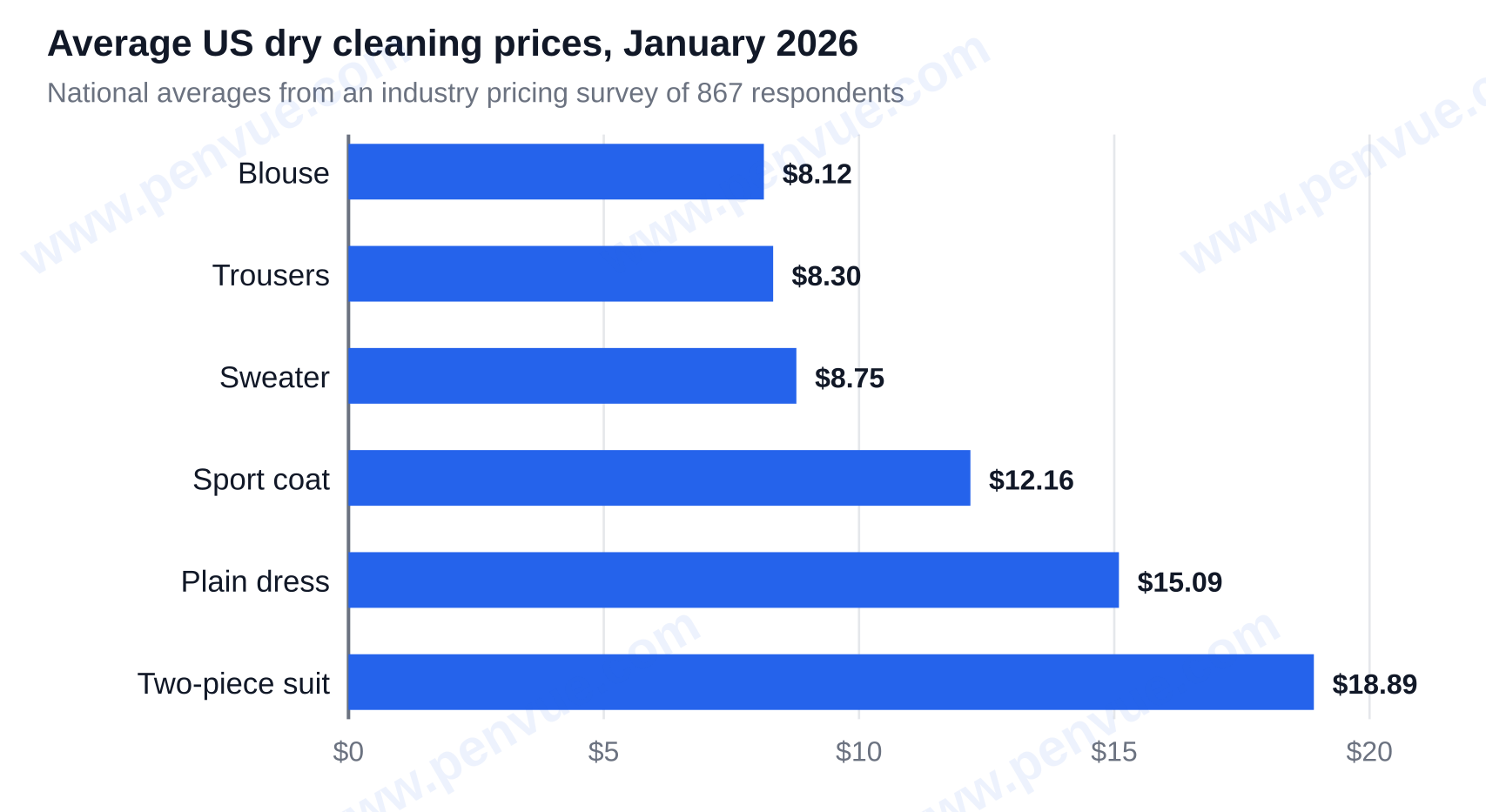
A US dry cleaning industry pricing survey of 867 respondents put average national prices as of January 2026 as follows: blouses $8.12, trousers $8.30, sweaters $8.75, sport coats $12.16, and plain dresses $15.09. A two-piece suit is $18.89. Embellishment, pleating and household items run above those averages. Restraint should be practiced. Over-cleaning costs money and wears down trims and finishes, so air and spot-treat tailored pieces between visits and save a full clean for visible soil, odor or end-of-season storage.
Rule of thumb: send out oily stains or structured, delicate items — a water-soluble stain on something washable means water, not solvent, is what will actually get it clean. For more on this, see our Lifestyle coverage.
FAQ
Does dry cleaning kill germs and bacteria?
Treat dry cleaning as soil removal, not sanitizing. The cycle Wikipedia documents does involve a solvent wash and drying in warm air at about 60–63 °C (140–145 °F), which is warmer than a cold home wash, but none of the sources here certify the process as a disinfection step. If the goal is germ and bacteria removal — gym sweat, illness, body odor — say so at the counter and ask the staff whether professional wet cleaning, which cleans in water, is the better route for that garment.
Does dry cleaning shrink clothes or wear them out over time?
Dry cleaning doesn’t shrink clothes like water does. Shrinking, felting and distortion in wool and silk come from water relaxing and swelling the fiber, and a water-free solvent avoids that — which is the whole reason structured garments are cleaned this way. Wear is a different story: repeated cleaning, pressing, and handling is hard on trims, buttons, glued beading and surface finishes. The fix is frequency, not avoidance. Airing clothes and spot treating tailored pieces between visits can help, and book a full clean for visible soil, odor or seasonal storage.
Can you dry clean clothes at home with an at-home kit?
Not really — the name of the kit oversells the product. Home kits can help remove small spots and give fabrics a light cleaning, but that’s about it: no consumer product replicates what the commercial process does: a sealed machine running 3–15 minutes of solvent wash, a rinse in clean solvent, extraction at 350–450 rpm, aeration through activated carbon filters, and finishing on a press or steam form. Those last stages of the dry cleaning process are what restore a garment’s shape. An at-home kit can buy you time between visits; it can’t substitute for one on a lined jacket.
How can you tell whether your dry cleaner still uses perc?
You can always ask your dry cleaner directly which solvent they run — shops that switched to hydrocarbon or siloxane usually advertise it. The EPA timeline also gives you a read: under the rule finalized December 18, 2024, perc has been prohibited in newly acquired machines since June 16, 2025, and it’s prohibited in third-generation machines and in spot cleaning three years after December 19, 2024, with all use in dry cleaning banned by December 19, 2034. So a perc shop today is running older equipment on a deadline. If your piece is beaded or delicate, that’s reason enough to choose a hydrocarbon or siloxane cleaner.