

You part the fur on your dog’s belly and see them: small, dark, fast, gone before you can pin one down. Here’s how to get rid of fleas on dogs: start a vet-recommended flea product on every pet in the house on the same day, and then comb and bathe your dog to remove the live fleas. Next, wash your dog’s bedding and all of your house’s bedding, vacuum thoroughly, and treat the shaded areas of your yard. Merck Veterinary Manual states you should have full control within 6 weeks to 3 months.
By doing all of this, you’ll have an actionable plan for tonight and in the following weeks. The first part of this process will take approximately 2 hours — comb, bath, laundry, vacuum. The remaining part, where most people fail, will require discipline and plans for the following weeks. This is explained in greater detail below.
Before you start: what you need
- A metal, fine-toothed flea comb and a bowl of hot soapy water beside you.
- A flea shampoo that is safe for your dog or a medicated flea shampoo. Mild dish soap is a safe knock down alternative.
- A flea product for each of your pets — dogs, cats and ferrets, each with a species appropriate product. Never use a dog product on a cat, as many dog products are toxic to cats.
- A vacuum that you can easily empty outside, and access to a hot washer and dryer.
- Have your vet’s number, as age, weight, and health of your pet dictates which product is legal and safe.
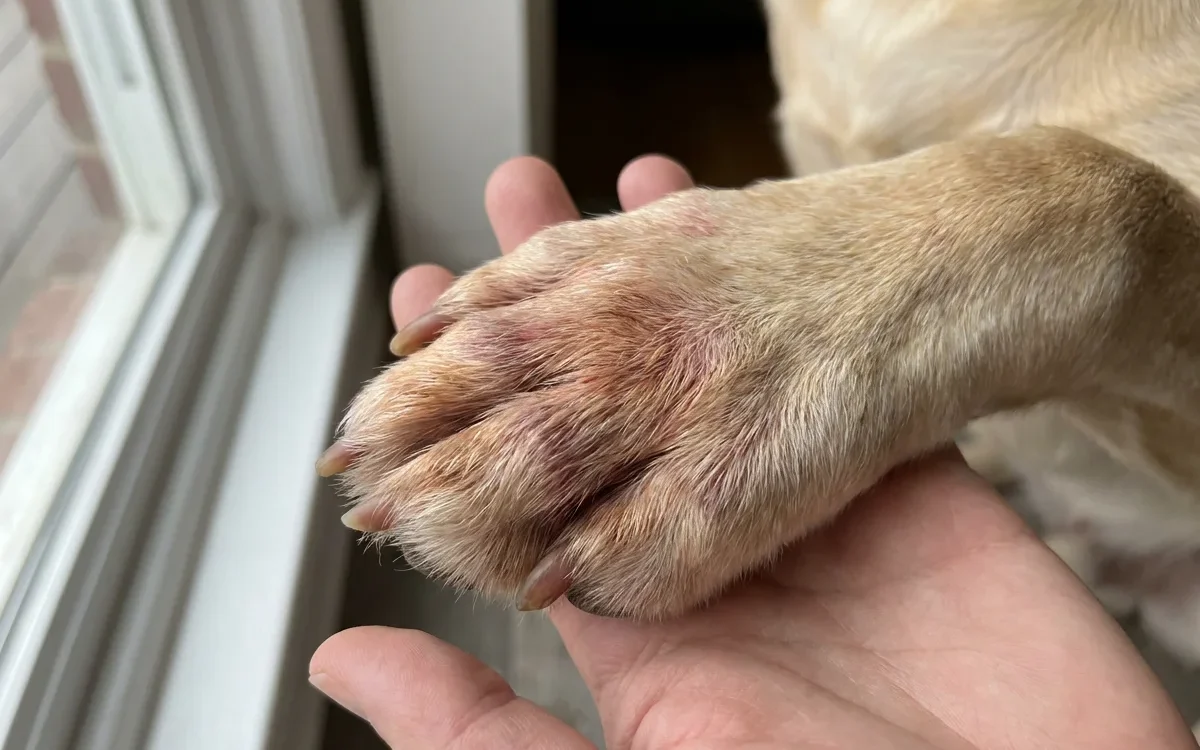
Inspect your pet for fleas before you spend any money. Adult fleas are dark, flattened, and hide in thin sections of hair. Look in the belly, groin, and inner thighs. A more definite sign of an infestation is the presence of flea dirt, which looks like black pepper and turns a rusty red color when smeared on a damp white paper towel because it is digested blood. Some behavioral signs include: constant scratching, chewing at the base of the tail and hips, head shaking, scooting, restlessness at night, and hair loss over the rump, tail base and backs of the thighs. If there is crusted, intense itching over these areas there may be a flea allergy dermatitis.
Most fleas on dogs are actually Ctenocephalides felis, the cat flea, not the dog flea, according to the Merck Manual. Therefore, your household cat also has to be treated too.
Skip the DIY plan and call your vet today if you see pale gums, weakness or lethargy (possible flea anemia), rice-like tapeworm segments near the anus, or open infected sores from scratching.
Why treating only the dog never works
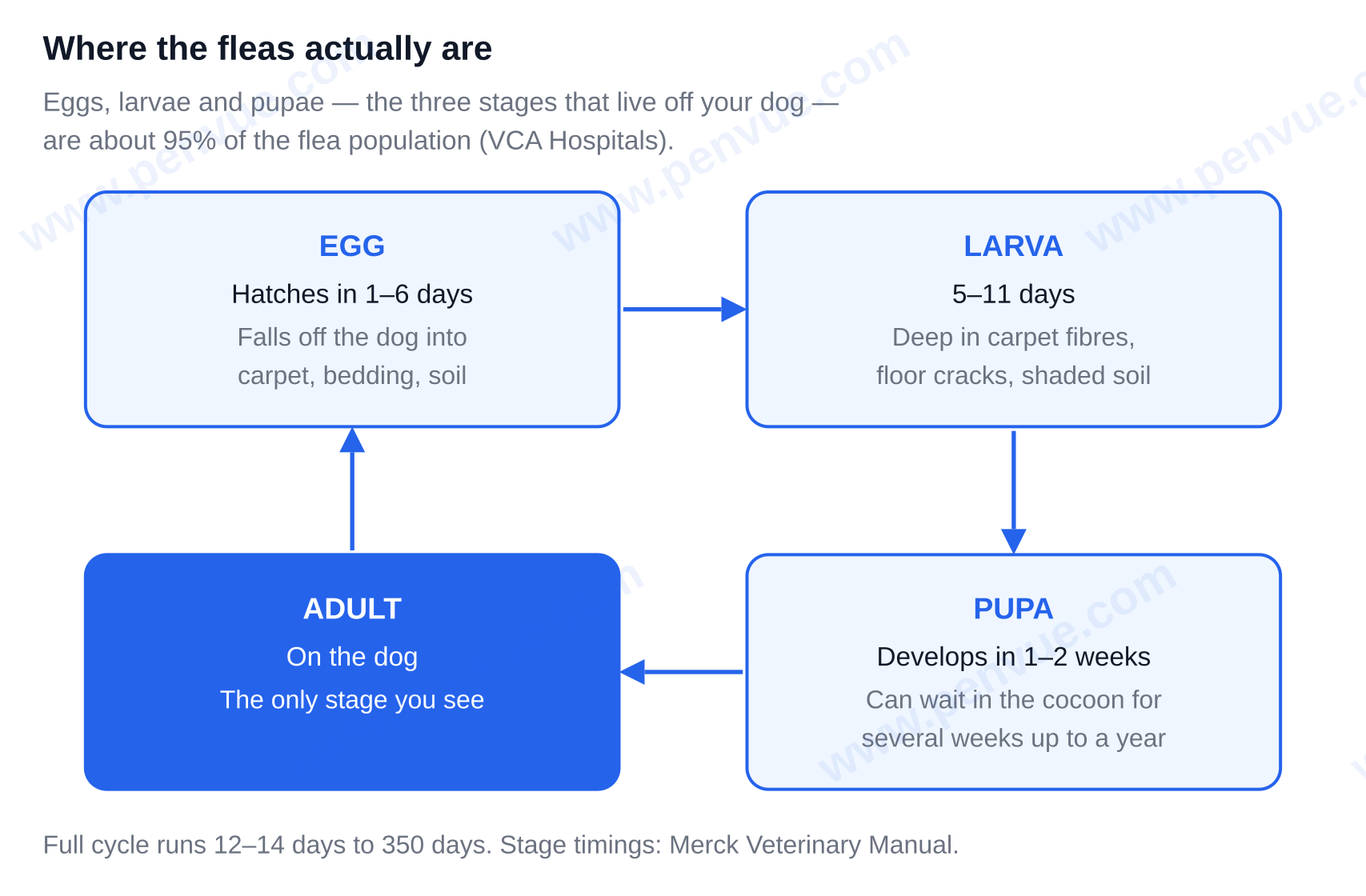
Fleas that you can see are only a small part of the population. VCA Hospitals says eggs, larvae and pupae make up about 95% of a flea population. These are highly resistant to treatment. They are found in carpet, bedding, cracks in flooring and shaded soil, and are not found on your pet. A female flea can lay up to 50 eggs each day and about 2,000 in her lifetime. With 12 adult fleas on your dog, that means the population has been established for some time.
The Merck Veterinary Manual’s flea life-cycle figures have the timing info that sets your schedule, and they explain the recurrence everyone complains about:
| Stage | How long it lasts | Where it lives |
|---|---|---|
| Egg | Hatches in 1–6 days | Falls off the dog into carpet, bedding, soil |
| Larva | 5–11 days | Deep in carpet fibres, floor cracks, shaded soil |
| Pupa | Develops in 1–2 weeks, but can wait in the cocoon for several weeks up to a year | Sealed in a cocoon wherever the larva was |
| Adult | Full cycle runs 12–14 days to 350 days | On the dog |
Flea pupae are the most resistant life stage to insecticides and can be sitting sealed up waiting for a host. This is why one home treatment is not enough, why insect growth regulators (IGRs) are important — IGRs don’t only kill adult fleas, they prevent eggs and larvae from developing — and why you have to treat your pets and your home on the same day, never a week apart. The CDC is explicit that treating the pet and the home should begin at the same time.
The step-by-step plan to get rid of fleas on dogs
- You treat every single pet in your house today with a product labelled for that species. Dogs, cats, ferrets — all of them. Having one untreated cat is like having an endless flea farm in your house.
- You want to use a knockdown product with a preventive product, not one or the other. A fast-acting product with a short residual effect, such as nitenpyram (Capstar), handles tonight; a monthly or long-acting preventive handles the infestation — an isoxazoline product (NexGard, Simparica, Bravecto, Credelio), a topical spot-on (Frontline Plus, K9 Advantix II), or a Seresto collar.
- Use a metal flea comb to pull the fleas off your dog. The combing should include the neck, back, tail base, belly, and armpits. Dip the comb in hot soapy water between strokes to drown the fleas so they don’t jump back on.
- Bathe your dog in lukewarm water with flea shampoo, lathered head to tail, avoiding eyes, ears and mouth. Let the shampoo sit on your dog for 5–10 minutes, then rinse thoroughly.
- Strip, wash and vacuum. Hot-wash all human and dog bedding and dry on high. Vacuum carpets, rugs, upholstery, baseboards and floor cracks, then empty the bag or canister outside immediately.
- Prioritize — treat only the parts of the yard that matter. Larvae, the younger life-stages, are typically found shaded and/or damp and can be found under porches and decks, along fence lines and in your dog’s favourite resting spots. Sun-baked open lawn needs almost nothing.
- Keep it up. Per the CDC, two or more additional treatments should be applied within 5–10 days of the first. Continue to vacuum every one to two days and medicate your pets continuously.
There are a few sequencing rules to keep in mind before you start. If using a spot-on topical is part of your plan, the bath and topical treatment cannot happen on the same afternoon. That’s the next section.
How fast each flea product works — and which one ends the infestation
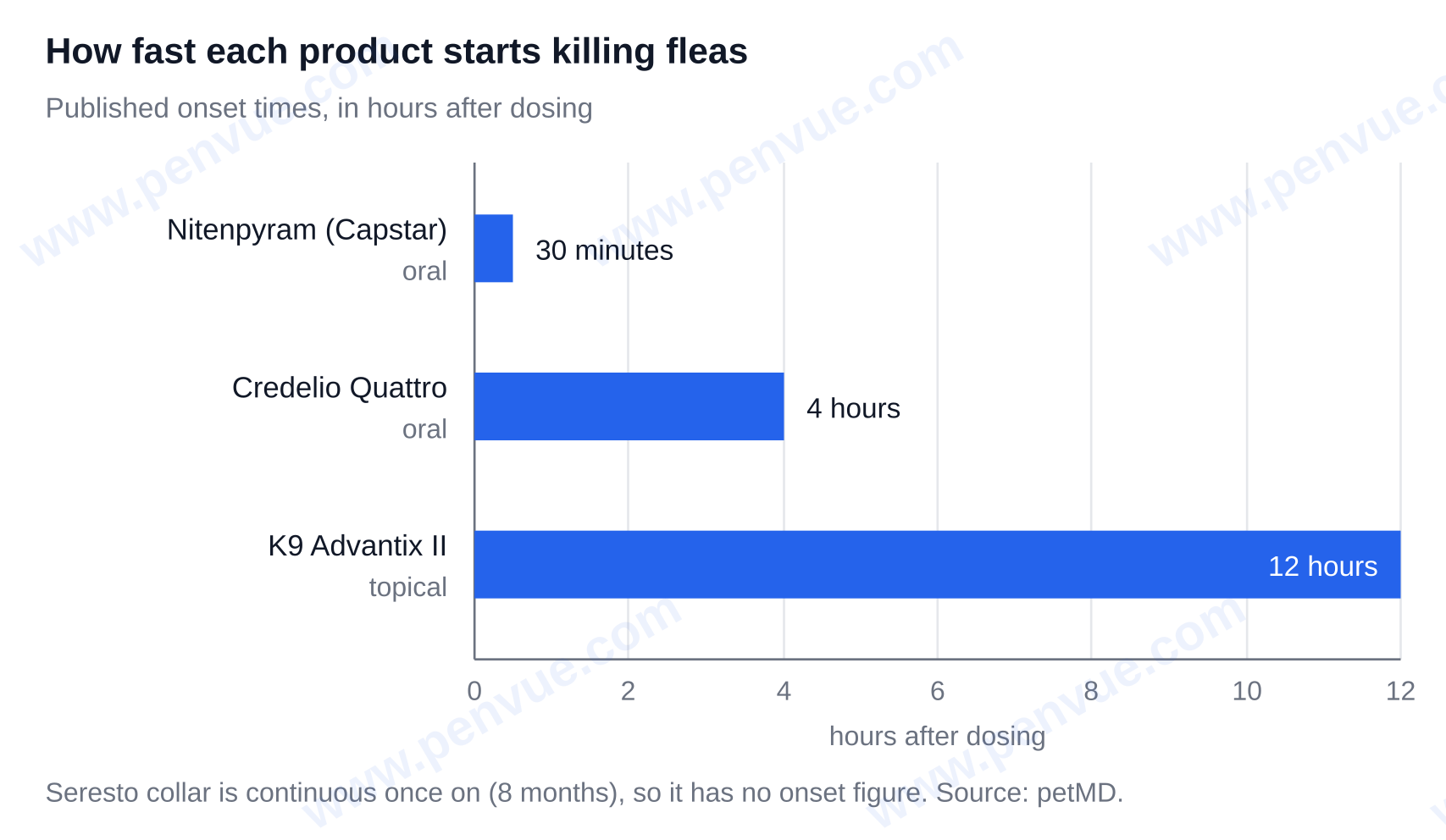
Most flea products are advertised as “fast-acting”, but that doesn’t really help you. How about onset times? Here are the published ones compared side by side, so you can weigh 30 minutes against 12 hours.
| Product | Speed of kill | How long it lasts | Other life stages? |
|---|---|---|---|
| Nitenpyram (Capstar), oral | Starts within 30 minutes; over 90% of adults in about 4 hours | Around 24 hours | No — adults only |
| Credelio Quattro, oral | Starts at 4 hours; more than 99% of adults within 8 hours | Monthly | Labelled from 8 weeks and 3.3 lb |
| K9 Advantix II, topical | Kills existing fleas within 12 hours | Monthly | Dogs only — toxic to cats |
| Seresto collar | Continuous once on | 8 months | No bathing or dosing calendar to miss |
Those figures come from petMD’s product and medication pages. As you can see in the table, the fastest acting flea control products are also the shortest-lived, with a knockdown time of 24 hours. So what does that mean for the infestation? A monthly or multi-month preventive is what solves the problem. Buying only one of the two is the single most common reason people are back searching a week later.
Orals bypass wash off, which is helpful if your dog swims or is bathed often. Topicals and collars are useful if your dog won’t take pills. The majority of over-the-counter sprays and powders are not effective on their own, and require an IGR.
What the FDA isoxazoline warning means for your dog
The FDA announced an animal drug safety communication about potential neurologic adverse events — muscle tremors, ataxia and seizures — with drugs containing isoxazoline, such as Bravecto, Credelio, NexGard and Simparica. This signal was consistent across the class and the FDA is working with manufacturers to update their labels; in the meantime, they consider these products safe and effective for the majority of animals. Bottom line: it doesn’t mean you should leave an infestation untreated. Let your veterinarian know if your dog has a history of seizures.
The mistake that makes people start over
If you take one thing from this page, take this: do not give your dog a flea bath and apply a spot-on treatment on the same day. The standard step lists put “give a flea bath” and “apply flea treatment” next to each other with no timing, so most people follow the list in a way that results in the treatment being washed off before it has a chance to absorb.
To follow the list of steps in the right order:
- Bathe your dog 24–48 hours prior to applying the spot-on treatment.
- Make sure your dog is completely dry — skin and coat.
- Part the fur and apply the treatment to the skin at the back of the neck; do not apply it to the coat.
- Keep the dog out of baths, swimming and rain for at least 48 hours afterward.
A common error is stopping treatment at week three, usually when people think they’ve eliminated the fleas. There is some discrepancy with the published timelines and the reason for that is pupal dormancy. Some cocoons can be dormant for weeks at a time. petMD says 3–6 weeks or longer to eliminate all life stages, Merck puts control at six weeks to three months, and other veterinary sources advise continuing at least three months. While “no fleas visible” at week three looks like the finish line, it isn’t — it’s best to look at it in the context of how many months you’ve been continuously dosing.
Three more mistakes that would result in a treatment restart: Leaving one pet untreated (usually the indoor cat that “doesn’t scratch”), not vacuuming frequently enough (every one to two days) during the hatch window, and using a product off-label (for example, using a product for a different species, the wrong weight band, splitting a large dog dose).
How to check it’s working
Before you continue to the next section, use the following as your progress test rather than a flea count.
- Days 1–3: You should see a good amount of dead fleas on your bedding or in your flea comb. That means the product is working.
- Weeks 1–2: You should do a two-minute comb check over the rump and tail base and notice fewer live fleas.
- Weeks 2–6: You may still see new adults emerging from pupae. This is completely normal, not failure.
- Month 3: You should continue to get “clean” comb checks, with the continuous preventive still in place.
No improvement after three to four weeks of a correct plan means a vet visit, not a different shampoo.
Home remedies, puppies, and keeping fleas away
There are some effective methods of manual removal of fleas: A flea comb with hot soapy water, a mild dish soap bath for a flea knock down, and hot water laundry and frequent vacuuming can help reduce the flea population. Dawn dish soap drowns and strips adult fleas, however, it has no residual effect, no effect on flea eggs, larvae and pupae, and dries the skin if used repeatedly. It is a tool and not a plan. Food-grade diatomaceous earth, if used sparingly and kept away from the air you breathe, can help dry out flea larvae in cracks. It is a slow remedy and no substitute for an Insect Growth Regulator (IGR).
Avoid these remedies. According to petMD, there is no evidence to show that garlic repels parasites and it damages red blood cells, risking life-threatening anemia. Pure tea tree oil is extremely toxic to dogs, causing death, with as little as 10–20 millilitres. The ASPCA also lists pennyroyal, pine, wintergreen, citrus/d-limonene, eucalyptus and cinnamon oils as toxic. Brewer’s yeast, vinegar in the water bowl, ultrasonic collars, and other remedies have no scientific evidence to back them up.
The standard pet flea advice generally does not work for puppies that are under the age and weight limits that are on the label, e.g. the Credelio Quattro label is 8 weeks and 3.3 pounds. For younger puppies, home methods are the main plan. Comb the fleas out, patience is important and so is dipping the comb in hot soapy water after every single stroke. Give a nice warm bath with a mild dish soap, then warm and dry the puppy deliberately, because a very young puppy can get chilled very easy. The environment should be treated vigorously as nothing on the pet is doing the work. Also call the vet the same week for the flea burden. Heavy flea burdens can cause anemia. Merck states that puppies are the group that is most at risk. Pregnant or nursing dogs, seniors and dogs that are on medication or have a history of seizures are other consideration for a vet call as well, not a shelf pick.
Prevention is cheap and effective once you clear your home. Every pet should be on year-round, uninterrupted prevention — indoor heating runs the life cycle through winter. Remind yourself to dose on time and know that a skipped month is the most common reinfestation route. Trim overgrowth, rake leaves, and keep your dog’s outdoor resting spots in a sunny spot. Larvae can’t survive in the sun. Bedding should be hot-washed every week or two, and high-traffic carpet should be vacuumed often to encourage pupae to emerge where the product can reach them. Common entry points for new fleas include a new puppy or rescue, boarding, daycare, dog parks, grooming, visiting dogs, and wildlife like raccoons, opossums and feral cats crossing the yard. If your dog has flea allergy dermatitis, consider prevention like you would a medication — a few bites restart weeks of itching.
Rule of thumb: treat every pet and the house on the same day, and continue treatment for three months — not until the fleas disappear. There’s more to read under Lifestyle.
FAQ
Can fleas live on humans or in my bed?
Fleas can definitely bite you, but they don’t live on us — they need a furry host to feed and breed on, so an adult flea on your skin is passing through. Your bed is different. Your dog brings flea eggs and larvae to your bed, and if that’s where your dog sleeps, the bedding is part of the infestation. So your bed needs to be hot-washed and dried on high heat along with your dog’s bedding, and keep vacuuming the bedroom carpet every one to two days through the hatch window.
Why does my dog still have fleas after treatment?
In almost all cases, it isn’t due to the treatment being ineffective — it’s the environment. VCA Animal Hospital states that roughly 95% of the flea population is composed of eggs, larvae, and pupae living in carpet, bedding and shaded soil, and Merck states that flea pupae can remain in the cocoon for several weeks up to a year before they emerge. So even if you properly treat for fleas, new adults will keep appearing for weeks after a correct first treatment. The other causes could be a cat or second dog in the house that is also not treated, a spot-on treatment that was washed off by bathing within 48 hours of applying it, or a missed monthly dose.
Do I need to treat my house if my dog never goes outside?
Yes. Fleas will come into the house by hitching a ride on visiting dogs, your clothing and shoes, through boarding and/or grooming, and from wildlife (raccoons, opossums, and feral cats) near the building. The Merck Veterinary Manual states that once a single female is indoors she can lay up to 50 eggs a day, and about 2,000 in her lifetime. Those eggs will develop in your carpet regardless of your dog ever stepping on grass. Treat the home on the same day you treat the dog.